ancient cash machine
Luther George Simjian Inventor and was one of the scientists who was quite long. He was born in Turkey on January 28, 1905, and died on October 23, 1997 at the age of 92 years.
Young Simjian proceed to United States at the age of 15 years, since being separated from her family during World War i. after meeting with her relatives in Connecticut, he began independent study by working as a photographer in accordance with the field of their interest. At the beginning of the beginning, Simjian studied at Yale University by taking medicine. But his interest changed when The University gave the work in the laboratory of a photo. In 1928, he had occupied the position of Director of the Photography Department at the University.
In 1934 Simjian moved to New York, where he developed the x-ray machine color and self-posing portrait camera, which allows the subject to look into the mirror and see the right picture to be taken. With this discovery, armed with Simjian built a camera manufacturing company and sell the license to use the camera in the studio are placed in a departmental Store with a name that was superseded by Photoreflex name Reflectone. This company then continue doing the development of electrical devices, and optical mechanics.
When Simjian offer ideas to make bank customers Transact finacial without meeting with the teller, he doubted many people. Do not know surrender, in 1939, Simjian registered 20 patents related to the new findings, and offers his findings to a large company that is now known as Citicorp. Only after 6 months later, the bid responds to Citicorp Simjian.
"Apparently, the person who will be using this machine is only a small number of prostitutes and gamblers who embarrassed and did not want to meet face-to-face with tellers" Simjian wrote.
Oops, it turns out this day on every street corner, we can easily find this "miraculous" machine. What is the doubts of many people at the time were not very evident. ATMS have become necessity inseparable for most people who live in urban areas. The discovery of Simjian initially doubtful, now has helped many people with the presence of ease through another cash machine.
READ MORE - ancient cash machine
Kamis, 18 Desember 2014
medical tools of antiquity
Amputation Knife (used in the 1700s)
The knife used for amputation in the 18th century, because of the shape the surgeon tend to make a circular cut through the skin and muscle before the bone is cut with the saw. In the 1800s, straight blades are becoming more popular because they can be more easily leave the folds of skin that can be used to close the piece.
Amputation Saw (used in the 1600s)
While some surgeons choose to flaunt their wealth with saws full of decorated like this, in the cracks the intricate sculptures proved to be a breeding ground for germs.
Arrow Remover (used in the 1500s)
Not much is known about this tool, but according to the hypothesis, this tool is inserted into the wound in the position of contracts, with the Central shaft is used to catch the eye darts. The knife, which seems to have the sharper edges facing outward, then extended by using a pair of scissors so that it can draw out the eyes DART.
Artificial Leech (used in the 1800s)
Siphoning off blood with workings such as the leech is a popular treatment for various medical conditions found in the 1840s and is often used in eye surgery and ear. The rotating blade will cut wounds in the skin of the patient, while the cylinder is to be used to produce vacuum that will suck the blood.
Bullet Extractor (used in the 1500s)
This tool is used to dilate the cervix of women during childbirth, with the amount of dilation is measured on a scale that there is in the butt. The tool is less favored because it often causes the cervix to tear.
Circumcision Knife (used in the 1770s)
Ritual circumcision performed worldwide for a variety of reasons, but some of the instruments used in that process as very scary because it uses the model of a knife as seen on the picture in Europe since the 18th century.
Ecraseur (used in the 1870s)
Ecraseur is used to decide on hemorrhoids and the uterus or ovarian tumors. Chains are looped over mass and amplified by using a ratchet, thus stopping the blood circulation in the area.
Hernia Tool (used in the 1850s)
This unique tool is used after hernia recovery. This tool will be incorporated into the body near the affected area and left it there for a week to produce scar tissue that will help close the hernia.
Hirtz Compass (used in 1915)
Hirtz compass used to determine the presence of bullets in the body accurately so that bullets can be removed with the utmost precision.
Hysterotome/Metrotome (used in 1860-1890)
Lithotome (used in 1740-1830)
Lithotome is used to cut the bladder which aims to remove the stone. Its axis contains a hidden blade is inserted into the bladder and then released using a spring-loaded handle.
Mouth Gag (used in 1880-1910)
This is a wooden stopper screw-shaped mouth that will be put into the mouth of a patient sedated to keep the airway so that is always open.
Scarificator (used in 1910-1920)
Scarificators used in the blood. Spring-loaded knives in this device will cut off the skin, and a special round glass cups can be applied on top of the wound. When it has become warm, will help draw blood out quicker.
Skull Saw (used in 1830 to 1860)
This knife is used to cut off part of the skull, allowing for access by other instruments.
Tobacco Smoke Enema (1750-used in 1810)
Tobacco Enema is used to insert the cigarette smoke into a patient's rectum for various medical purposes, mainly to resuscitate the victim. A tube will be inserted into the anus was connected to a fumigator and the bottom which forces the smoke toward the rectum. The warmth of the smoke was thought to stimulate the process of respiration, but doubts about the credibility of this tool causes the onset of expressions such as "smoke that will explode one's ass."
The Guillotine (used in the 1860s)
This tool is used to remove the tonsils, which worked like a guillotine blade, which will slice up the infected tonsils. This "double" guillotine designs for both the tonsils may be removed at the same time.
Trephine (used in the 1800s)
Trephine is a medical device which features a knife cylinder used to hollow out a skull. And the Spike in the middle is used to start the procedure of cutting.
Vaginal Speculum (used in the 1600s)
Specula were used for thousands of years, which allows doctors to have better vision and access to areas of the vagina (or other body cavities). This is an example of medical instruments in 17th-century Europe, which appears to use movement cranking for expansion, more than just a scary decorations.
READ MORE - medical tools of antiquity
Native American tribes
Once the bells used to preach a Word to people and as a marker of time. Bell is also used by Christians to give a sign of time served, it is usually performed three times, at 06.00. 12.00 and 18.00. Bell first used within the Catholic Church around the year 400 BC, and is considered to be introduced by Paulinus, Bishop of Nola, a town in Campania, Italy. Its use spread quickly and widely not only used to gather people in a religious event, but also as a warning when there is danger.
moke
Native American tribes use the smoke as a tool to communicate with his tribe or clan to another. Typically, the smoke is used for sending secret messages. A puff of smoke contains specific meanings that can only be read by native American tribes, such as the puff one time means warning. When they fought as well as using smoke to communicate with your opponent.
Homing pigeons
Perhaps the homing pigeons, we all already know its usefulness in the past. Not only during the war but since the times first Pigeons used to deliver remote messages. During the war it more, especially when communication tools are not functioning. Then pigeons, one of which was used to convey the message of a secret military messages. While Canaries are utilized to detect toxic gas attack in World War I.
Slit Drum
Slit drum is the medium of communication in the community Indonesia since ancient times. Usually, a slit drum used to notify residents as a warning there had been something, such as fire, theft, and natural disasters. At the time of the kingdoms of the Malay Archipelago, slit drum and the like, such as gong used to gather people. Usually this slit drum punches to give an announcement to the people. People who hear the voice of slit drum with rushing gathered to listen to information, news or announcements. In its use, for each area of a slit drum does not have a standard. Each region has a specific sense code or towards the slit drum sounds, such as a beaten slit drum sound several times quickly indicates any danger of flooded or theft. Place of worship still also use similar traditional equipment like beduk slit drum and Bell.
Lontar Leaf
Communication activities in the past have used written on media such as, animal bones, leaf inscriptions and epigraphs. In Indonesia there has been correspondence activities since the era of Hindu Kingdom of Pajajaran, such as Mataram, Majapahit, Kutai, Srivijaya and Mataram. Typically, to send a letter to a neighboring country, the Kingdom of Palmyra leaf using media, bark and animal skins, animal bones, and a stone slab. General communication medium used is leaves ejection, ejection leaves the grounds very easily obtained.
READ MORE - Native American tribes
Jumat, 19 Juli 2013
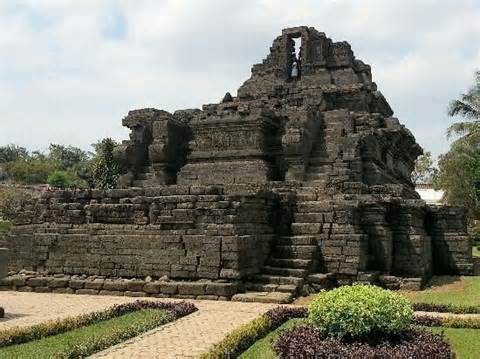
Candi Jawi
Pasuruan is a district in East Java province, Indonesia. In this area there are a relic of history (the past) in the form of temples, namely Candi Jawi. The temple is exactly located at Candi Wates village, District Prigen, Pasuruan, East Java. To be able to reach the place (from Surabaya) can use public transport in the form of Surabaya-Malang majoring bus, then get off at kilometer 45 (the city district Pandaan) and continued with another vehicle (Tretes majors) with a distance of approximately 1 mile past the park Candra Wilwatikta. Unlike other temples are generally changed by place name, state, or taste that gives a name (eg: Prambanan, Burbrah, Bima and others), Candi Jawi is one of the few temples whose name is virtually unchanged, although there also change greeting. In this temple Negarakertagama called Java-Java or Jajawi.
Historical
Jawi Temple was built around the 13th century it was a place where the ashes of King Kertanegara part (last king Singosari) who died in 1292 AD Most other ash deposited on Singosari. In the days of Majapahit, Candi Jawi been visited by King Hayam Wuruk (Rajasanagara) during a trip to East Java and Central Java in the third year of his reign (1275 C/1353 F). King Hayam Wuruk journey is accompanied by the entire royal family (Lord Prabhu Sapta), ministers, religious leaders and representatives of community groups. Nagarakertagama mention that the king Hayam Wuruk with his entourage aims primarily to circumstances that lead people live, is like a kind of "inspection" (spot checks) is usually done by the officials present. Aside from being a surprise inspection and pilgrimage, some are saying that the trip was Hayam Wuruk dharma is one that must be lived, which means magical, ie for unification and unity (unity) his kingdom.
Traveling troupe king Hayam Wuruk stopping in several places in his territory, as Lasem (in 1354 AD), Lodaya (1357 M), Palah (1361 M), Lwang, Balitar, Jime and Scallop. During the trip, Hayam Wuruk also had mobilized the people to fix some of the crossings in the Solo and Brantas River, Kali Konto dam repair, fix and once nyekar Sumberjati temple or pilgrimage to the grave of his grandfather (Raden Wijaya), restoring Jabung temple (1353 AD), beautify the temple worship in Panggih Tribhuwanattunggadewi, adding ancillary temples in Palah (Panataran-Blitar, 1369 AD) as well as a gazebo for the benefit persajian (1375 M), completing two temple in Kediri (Temple Surawana and Tigawangi), and finally in 1371 founded the Rice temple near Porong in East Java, which resembles enshrinement in Champa.
According Nagarakrtagama, the temple will be full of cultural values at candrasengkala or the Fire Archery Day (1253 C/1331 M) never damaged by lightning. Addition to the temple, there is a statue that were damaged the statue of Maha Aksobaya. This makes King Hayam Wuruk very sad, so one year later (1332 AD) he mobilized the people to fix it again. However, just like other temples in Java, Candi Jawi note new start again at the beginning of the 20th century, after being ravaged buildings and so many missing elements.
Restoration
Candi Jawi newly restored back in 1938 because the condition is broken. The restoration of a supposedly qualified techno-archaeological Oudheidkundige Dienst was done by the foot of the temple rebuilding again, peel the temple yard and preparing some of the temples in the form of the experiment. However, the restoration was stopped in 1941 because most of the stone has been lost.
Restoration effort started again at Pelita II (1975/1976) conducted by the Directorate. Linbinjarah, Directorate of Culture, Department of Education with Drs. Tjokrosudjono (Head of Heritage and Archaeology Asylum East Java) as the head of the field. In this third restoration, thanks to the foresight of a worker named Mbah Karto Plewek of Prambanan, the stones were lost can be found again sebingga restoration can proceed to completion in 1980. Two years later (1982), Jawi Temple was inaugurated by the government and used as well as heritage buildings and historical sights.
Building Data
Jawi Temple was built on a high shelf or base and surrounded by a courtyard and pool. Outside the pool, there are still remnants of the pages linked to the gate. But the form page, gates and other buildings including the fence is not clear anymore because collapsed, lost or overwritten other buildings on it.
Jawi temple stands on a rectangular field that the material is made of black stone and a white stone, measuring 14.24 x9 wide, 55 meters by 24.50 meters high. Like the other temples, this temple consists of three parts: legs, body and roof. At the foot of the temple are carved reliefs hitherto unknown meaning for sure, the reliefs depicting female figures, and the accompanist (punakawan), building houses and temples, and a wide panorama of trees. In front of the temple there is a ladder up the rest of the building color rectangular cross that is located at the front door facing eastward somewhat oblique to the north, back to Mount Guarantee. The position of the door by some experts as a reason to emphasize that the Jawi Temple is not a place of worship or circumambulation, because the temples for worship places are usually facing toward the mountain, the abode of the gods.
According Negarakertagama, on the inside of the temple are the chambers where Shiva statue, Nandiswara, Durga, Ganesha, Nandi, and Brahma. Currently these statues have been kept at two museums. Durga Acra kept in museum master Tantular, Surabaya. Whereas other statues again, except the statue of Brahma stored in Trowulan Museum. Brahma statue was not saved because it is not found anymore.
READ MORE - Candi Jawi
Bajangratu temple
Bajangratu temple in Hamlet Kraton, Temon Village, District Trowulan, Mojokerto, about 3.5 km from the Temple Wringinlawang and approximately 600 m from the Rat Temple. This temple still keeps a lot of things that have not known for certain, both concerning the year of manufacture, the king who ordered its construction, function, and other aspects. Bajangratu name was first mentioned in Oudheidkunding Verslag (OV) in 1915. Sri Soeyatmi Satari archaeologists suspect something to do with the name Bajangratu Jayanegara King of Majapahit, due to the word 'bajang' means dwarf. According to the Pararaton and folklore, Jayanegara crowned bajang or when the age is still small, so the title of Queen Bajang or Bajangratu attached to it. Regarding the function of the temple, it is estimated that the temple erected in honor Jayanegara Bajangratu. The basis of these estimates is the Sri Tanjung relief gate at the foot of a story depicting the cleansing. Cleansing story contains reliefs found also, among others, in the temple Surawana. Surawana temple allegedly built in connection with the death of Bhre Wengker (late 7th century). In the Book Pararaton explained that Jayanegara died in 1328 ('sira ta dhinar clicking Kapopongan, bhiseka ring ring csrenggapura Pratista Antarawulan'). It also said that King Jayanegara, the return to nature Vishnu (died) in 1328, made a sacred place in the kedaton, made the statue in the form of Vishnu in Petak and Bubat Shila, and made a statue in the form Amoghasidhi in Sukalila. According to Krom, Csrenggapura the same Pararaton Antarasasi (Antarawulan) in Negarakertagama, so it can be concluded that the 'dharma' (shrine) located in King Jayanegara Kapopongan Csrenggapura alias alias alias Antarawulan Crirangga temple, which is now called Trowulan. Statues of the king embodiment in the form of Vishnu was also present in Bubat (Trowulan). Only the location of plots Shila (Selapethak) are not yet known. In addition to the above opinion, there are other opinions about the functioning of the temple Bajangratu. Given the shape paduraksa gate or gate is roofed with stairs up and down, Bajangratu allegedly one of Majapahit palace gates. This estimate is supported by its location not far from the site of the former palace of Majapahit. Bajangratu expected founded between the 13th century and into the 14th, given: 1) Forecast function as a temple cleansing Jayanegara King, who died in 1328 AD; 2) arch shape similar to the temple dates to the year in Blitar Panataran; 3) Relief decorative door frame similar to the Ramayana reliefs on temple Panataran; 4) Shape the dragon reliefs show the influence of the Yuan Dynasty. J.L.A. Brandes estimates that Bajangratu built in the same era with Candi Jago in Overlapping development, Malang, judging from the relief lions flanking the left and right side of the head of Kala, which is also contained in Jago Temple. Candi Jago itself was probably built in the 13th century. Bajangratu temple occupies a fairly wide area. The entire temple is made of red brick, except stairs and inside the roof. In relation to form a roofed gate, Candi Bajangratu facing both directions, ie east-west. The height of the temple to the top of the roof is 16.1 m and a length of 6.74 m. Gate Bajangratu have wings on the right and left. On each side there are stairs that flank the ornate lion and the long-eared animals. At the foot of the temple wall, flanking the stairs, there is a relief Sri Tanjung, while on the left and right of the front wall, flanking the door, there is a relief Ramayana. Temple door decorated with relief when the head is located just above the threshold. At the foot of the doorway is still visible pits where plugging sills. Maybe before the door is equipped with a door leaf. The temples formed a corridor stretching from west to east. The stairs and hallway floors are made of stone. The interior of the temple roof is also made of stone blocks are arranged longitudinally north-south, forming a narrow space at the top. The roof of the temple is Meru (mountain), similar tiered pyramid, with square tops. Each layer is decorated with carvings with inverted pyramid pattern and crop patterns. At the center of the layer-3 there is a relief to the sun, which is said to be the symbol of the Majapahit kingdom. Although this temple faces east-west, but the shape and decoration on the north and south sides are made similar to the other two sides. On the north side and the south created niches that resembles the form of the door. At the top of the temple are carved eagle head and enclosed sun dragon. Bajangratu temple has undergone restoration in the Dutch period, but did not obtain data on exactly when the restoration was carried out. Improvements that have been made include strengthening at the corner of hardener by filling batter into nat-nat is tenuous and replace wooden beams with cast cement. Some of the stones are missing rung rung arrangement has also been replaced.
Jago temple
Candi Jago Jago is located in the hamlet, village Overlapping, Overlapping District, Malang regency, precisely 22 km to the east of the city of Malang. Because of its location in the village of Overlapping, this temple is often also called the Temple Tumpang. Locals call it the Dome. According to the book Negarakertagama and Pararaton, the actual name of this temple is Jajaghu. In stanza 41 gatra 4th Negarakertagama explained that the King Wisnuwardhana Singasari ruled Shiva embraced Buddhism, which is a religious sect which is a blend of Hinduism and Buddhism. The flow developed during the reign of the Kingdom Singasari, a kingdom which is located about 20 km from Candi Jago. Jajaghu, which means 'greatness', a term used to refer to the sacred place. Still according to the book Negarakertagama and Pararaton, Candi Jago ongoing development since in 1268 AD until 1280 AD, as a tribute to the King Singasari 4th, the Sri Jaya Wisnuwardhana. Although it was built during the reign of the Kingdom Singasari, mentioned in both books that Candi Jago during the year 1359 AD is one of the places frequented by King Hayam Wuruk of Majapahit Kingdom. Candi Jago linkages with the Kingdom Singasari seen also from sculpture lotus (lotus), which extends to the top of the cob, whose statues adorn the mat. Such lotus motif was very popular during the Empire Singasari. What to watch in the history of the temple is the habit of ancient kings to restore the temples established by previous kings. Candi Jago allegedly also has undergone restoration in the year 1343 AD on the orders of King Adityawarman of Malays who still have blood ties to the King Hayam Wuruk. Currently Candi Jago in ruins that have not been restored. Overall rectangular temple building with an area of 23 x 14 m. The roof has gone, so that the original building height can not be known with certainty. It is estimated that up to 15 m high. Temple facing west, standing on approximately 1 m tall platform and the foot of the temple consists of 3 storey terrace. Getting to the top, decreasing the foot of the temple terrace so that the first and second floor there is a hall that can be passed to surround the temple. Garba Ghra (main hall) is shifted slightly to the rear. Composite building form, berselasar and shifted to the rear is a common form encountered in building the megalithic era, namely the so-called building punden. Form that is commonly used in building a place of worship ancestral spirits. Given its shape, it is estimated that the development goals for the Candi Jago is also a place of worship ancestral spirits. But still required further research and studies to prove its truth. To ascend to the upper floor, there are two narrow staircase on the left and right of the front (west). Floor most important role is the holiest and most top, the building that is located slightly shifted to the rear. Jago temple was filled with relief panels neatly carved from the feet up to the top wall of the room. There was hardly an empty field, because all filled with a variety of ornaments in the fabric of the stories contain elements of the release of the departure. This reinforces the notion that development is closely related to Candi Jago Sri Jaya Wisnuwardhana death. In accordance with the religion professed by King Wisnuwardhana, namely Shiva Buddha, the temple reliefs at the containing Jago Hindu and Buddhist teachings. Buddhism is reflected in the story Tantri reliefs Kamandaka and Kunjarakarna story carved on the bottom terrace. On the second terrace wall sculpted Kunjarakarna stories and excerpts follow the story of Mahabharata which contains the teachings of Hinduism, namely Parthayajna and Arjuna Wiwaha. The third terrace is filled with continued relief Arjunawiwaha story. The walls of the temple are also filled with bas-reliefs of Hindu stories, the war Krishna with Kalayawana. In the middle of the front yard, about 6 m from the foot of the temple, there is a large stone carved statue resembles a giant saucer shape, with a diameter of about 1 m rock. On top are carved lotus flower that protrude from the cob.
central government
At the beginning of the 10th century AD, ie in 929 AD, the central government in Java moved to East Java. MPU Sindok, descendant of the kings of Mataram Hindu, established a kingdom in East Java with the central government in Watugaluh, which is expected to be located in the area Jombang. Sindok MPU was replaced by his daughter, Sri Isyana Tunggawijaya, so the kings hereinafter referred to as the House of Isyana. Grandson of Queen Isyana Tunggawijaya, Mahendratta, married to King Bali, Udayana, and has a son Airlangga. Airlangga descendants kings who ordered the construction of most of the temples in East Java, although there are also temples were probably built in the early times, as Badhut temple in Malang. In Dinoyo Inscription (760 AD) mentioned about a kingdom located in Dinoyo Kanjuruhan, Malang, who is believed to have close links with the construction of a Hindu temple called the Temple Badhut. Unless Badhut Temple and Temple Songgoriti in Batu, Malang, making large-scale stone building in the newly emerged again during the reign of Airlangga, for example the construction of baths and temples Jalatunda Hemisphere in Mount Guarantee. Temple in East Java have different characteristics from those in Central Java and Yogyakarta. In East Java was not found to be large or wide temples, such as Borobudur, Prambanan in Central Java or Sewu. The only temple complex occupies a rather broad is Panataran Temple in Blitar. However, the temple in East Java are generally more artistic. Mat or foot of the temple is generally higher and shaped terraced hall. To get to the main building of the temple, one has to cross the hall-storey hall with stairs connected. Body building temples in East Java generally slender with a terraced roof and tapers to the top of the cube-shaped roof tops. Makara use side entrance was replaced with a statue or carved dragon. Significant differences were also seen in the reliefs. Relief in East Javanese temples carved with shallow carving techniques (thin) and symbolic style. Objects and figures depicted a side view depicted generally taken from wayang stories. Hindu temples in East Java are generally decorated with reliefs or statues relating to the Trimurti, the three deities in Hinduism, Shiva or relating to, for example: Durga, Ganesh, and Agastya. Figures and decorations related to Hinduism is often presented along with figures and ornaments associated with Buddhism, particularly Tantric Buddhism. Another characteristic of temples in East Java is a relief that the story of the puppet show. Development timescales temples in East Java is longer than that took place in Central Java, which only ranged between 200-300 years. Pembangunanan temple in eastern Java is still going on until the 15th century. The temples were built during the Majapahit Kingdom in general uses the basic ingredients of red brick with a more sederhana.Beberapa ornate temple built at the end of the reign of the Majapahit Kingdom anthropologists considered to reflect "rebellion" that arise from distrust and dissatisfaction against the state in his time of chaos and also as a result of concerns regarding the emergence of a new culture. The movement characteristics are: 1) The existence of mystical ceremonies are generally held-magical secret; 2) dimunculkannya savior figures; 3) The figures are believed to be the defender of justice; 4) The emergence of the exiled community, generally to the area- mountain areas, as well as 5) dimunculkannya back culture "old" as a form of longing for the golden age in the distant past. These characteristics are found, among other things, in the temple and Sukuh Cetha. In the 13th century Majapahit Empire began to recede along with the prestige of Islam to Java. At that time many sacred buildings associated with Hinduism and Buddhism abandoned and eventually forgotten by most of the people who have switched to Islam. As a result, the temple was abandoned and began a landslide buried overgrown shrubs. When then the area around it developed into residential areas, the situation became even worse. The walls of the temple was dismantled and taken to the stone foundation of the house or pavers, crushed red brick while the cement to be red. A number of ornate stone carvings and statues taken by cinder-cinder estate for display at factories yard or home office owned plantations. Details on temples in East Java are generally sourced from the book written by the MPU Negarakertagama prapanca (1365) and written by MPU Pararaton Sedah (1481), as well as from various inscriptions and writings in the temple in question. In the discourse of Indonesian archeology, there are 2 shades of the hue enshrinement Central Java (5-10 century AD) and the pattern of East Java (11-15 century AD), which each have different styles and characteristics. Central Java patterned temples generally have a fat body, with the vertical dimension geometric center is located in the middle of the temple, while the East Java style slender, horizontal terraces with the most sacred part lies behind. Different premises of temples in Central Java, as well as a monument to the temple in East Java, allegedly also serves as a place pendarmaan and perpetuation of the king who had died. Pendarmaan temple which houses, among other things, to the King Wisnuwardhana Candi Jago, Candi and Candi Jawi Kertanegara Singasari to the King, to the King Hayamwuruk Ngetos temple, Kidal temple for King Anusapati, Bajangratu temple for King Jayanegara, Jalatunda temple for King Udayana, Bath Hemisphere for King Airlangga, Temple Rimbi to Queen Tribhuanatunggadewi, Candi Wengker Surawana for Bre, and Bre temple Tegawangi for Matahun or Rajasanegara. In Javanese philosophy temple also serves as a place ruwatan king who had died in order to back the sacred and can be a god incarnate again. Confidence is closely related to the concept of "god king" strongly developed in Java while at the same time. Ruwatan function characterized by the foot of the temple reliefs depicting legends and stories that contain moral messages, such as those found in Candi Jago, Surawana, Tigawangi, and Jawi. Temple in East Java amounted to tens, general construction has close links with the Kingdom and the Kingdom of Majapahit Singasari. Not all temples contained within this website. There are many temples, especially small temples are not covered, including: Bacem, Bara, Baby, Besuki, Carik, Dadi, Domasan, Picture, Picture Wetan, Gayatri, Gentong (in restoration), Indrakila, Jabung, Jimbe, Kalicilik , Kedaton, Kotes, Wardrobe, Headman, Menakjingga, Mleri, Ngetos, Pamotan, Panggih, Pari, Patirtan Jalatunda, Sanggrahan, Selamangleng, Selareja, Sinta, Songgoriti, Sumberawan, Sumberjati, Sumberjati, Sumbernanas, well, Watu Lawang, and Watugede.
Rabu, 03 Oktober 2012
UFO
If
friends meticulous in observing the forms of relief on one corner of the temple
of Abydos above, it will easily find some relief depicting shape modern vehicles
such as helicopters, submarines and even aircraft that resembles UFO.
Is it true that in ancient Egypt has had flight technology? Is there a connection with Atlantis? An ancient papyrus records the visit of UFO near the palace of Pharaoh. Uniquely, in the temple of Abydos hieroglyphs are similar to a series of airplanes, helicopters and even submarines.
Big city Abydos, the ancient language called "Abdjw" comes from the pre-dynastic period (4000 BC) is a hereditary history of Egypt. A place where there are many graves of kings in the pre-dynastic period of ancient Egypt which makes the area soon developed for religious purposes such as the center of worship for Osiris.This was first done in the tombs of the First Dynasty King Djer, identified as "a place of worship of Osiris". It is a myth that the king is God Egyptian society in pre-dynastic (menunjukpada like "Osirieon"). Osiris due attention to the big city to be a place of pilgrimage, one of the best places to actually desired funeral or memorial construction (monument built to honor the death of a person whose remains are elsewhere). Celebrations and a great desire to play life and death of Osiris was held here from Dynasty 12 (1985-1795 BC) until the Christian era.
One of the most important monuments in the region is the Temple of Seti I, which was built to honor Osiris. The temple is believed that Seti who is an architect and planner classic Egyptian temple truly scalable, but as a change of leadership when building the foundation of an accident so that the presence of the monument Djer unload place, and it is in reference to the Middle Kingdom tomb of Osiris as the place outside possibilities of wisdom, the home of Seti I and Rameses II expanded and elevated from the Osirion and penchant cult temple of Seti I Osiris connect later.
In February 1988, informed that the existence of Egyptian society where relief is considered as the "enigma". Of course, in between writing hieroglyphs, there is one that can easily distinguish an image that resembles a helicopter.This news is almost two years old have been published in France. Some people argued about the scheme sensibly explain the presence of "helicopter" between writing hieroglyphs.Clearly visible, others will say that the picture does not depict "helicopter" but more than one or two planes, submarines and even a UFO!
According to Mike Dyall Smith from Melbourne university that is more famous for the image promoted by the "new age or UFO buffs". Egyptian experts generally acknowledge that the image is clearly visible foreign aircraft is an illusion that occurs due to erosion of the rock surface (see the damage in the area of the ceiling) and the process of re-sculpting in stone and patch to replace some of the hieroglyphs-hieroglyphs.When fillings fall out bit by bit from GLIP the old and the new GLIP cover and shaped "traces the strange". The use of the technique called the "Palimpsest". Everyone is well verse in the Egyptian inscription describes the return of sculptural pile of shattered inscriptions in the ancient Egyptian custom of the king as seeking to obtain a previous pharaoh or to discredit them.
But actually, this explanation is not very satisfactory. Really Abydos is an inscription that really describes the technology space or submarine in Ancient Egypt? To be sure, though different time, but in Egypt there is a papyrus that tells the UFO presence.The report noted a fairly old about life on other celestial is derived from the 15th century BC, were listed on the diary of Thutmosis III (an ancient Egyptian pharaoh of the 18th dynasty, 1504-1450 BC). Writing in papyrus (ancient writing) are found by Alberto Siliotti, reads as follows:
"In the twenty-second year, in the third month of winter, at the sixth day .... the author of House of Life see the existence of a ring of fire that appears in the sky. He does not have a head, and his breath smelled foul. One rod length, breadth 1 rod (5m). He did not make a sound. Because of the confusion they lay ... They came to Pharaoh to report what they had seen. The king contemplating and studying at the problem. Meanwhile ... a few days later, things had grown a lot in the air ... The army of Pharaoh kept an eye on those things when His Majesty the King was in the midst of them. That time is the time after dinner. The circles were then added flames rose higher in the sky, heading south. Fish and ducks falling from the air. And Pharaoh sent, and took frankincense, and baked for security and peace in the lives of people ... "
In addition, many discoveries of ancient artifacts that seemed odd shows that in the past, our ancestors have interacted with beings from outer space. There is also a link to the rest of the Atlanteans. Read also about the Vimana and Vailixi.
READ MORE - UFO
Is it true that in ancient Egypt has had flight technology? Is there a connection with Atlantis? An ancient papyrus records the visit of UFO near the palace of Pharaoh. Uniquely, in the temple of Abydos hieroglyphs are similar to a series of airplanes, helicopters and even submarines.
Big city Abydos, the ancient language called "Abdjw" comes from the pre-dynastic period (4000 BC) is a hereditary history of Egypt. A place where there are many graves of kings in the pre-dynastic period of ancient Egypt which makes the area soon developed for religious purposes such as the center of worship for Osiris.This was first done in the tombs of the First Dynasty King Djer, identified as "a place of worship of Osiris". It is a myth that the king is God Egyptian society in pre-dynastic (menunjukpada like "Osirieon"). Osiris due attention to the big city to be a place of pilgrimage, one of the best places to actually desired funeral or memorial construction (monument built to honor the death of a person whose remains are elsewhere). Celebrations and a great desire to play life and death of Osiris was held here from Dynasty 12 (1985-1795 BC) until the Christian era.
One of the most important monuments in the region is the Temple of Seti I, which was built to honor Osiris. The temple is believed that Seti who is an architect and planner classic Egyptian temple truly scalable, but as a change of leadership when building the foundation of an accident so that the presence of the monument Djer unload place, and it is in reference to the Middle Kingdom tomb of Osiris as the place outside possibilities of wisdom, the home of Seti I and Rameses II expanded and elevated from the Osirion and penchant cult temple of Seti I Osiris connect later.
In February 1988, informed that the existence of Egyptian society where relief is considered as the "enigma". Of course, in between writing hieroglyphs, there is one that can easily distinguish an image that resembles a helicopter.This news is almost two years old have been published in France. Some people argued about the scheme sensibly explain the presence of "helicopter" between writing hieroglyphs.Clearly visible, others will say that the picture does not depict "helicopter" but more than one or two planes, submarines and even a UFO!
According to Mike Dyall Smith from Melbourne university that is more famous for the image promoted by the "new age or UFO buffs". Egyptian experts generally acknowledge that the image is clearly visible foreign aircraft is an illusion that occurs due to erosion of the rock surface (see the damage in the area of the ceiling) and the process of re-sculpting in stone and patch to replace some of the hieroglyphs-hieroglyphs.When fillings fall out bit by bit from GLIP the old and the new GLIP cover and shaped "traces the strange". The use of the technique called the "Palimpsest". Everyone is well verse in the Egyptian inscription describes the return of sculptural pile of shattered inscriptions in the ancient Egyptian custom of the king as seeking to obtain a previous pharaoh or to discredit them.
But actually, this explanation is not very satisfactory. Really Abydos is an inscription that really describes the technology space or submarine in Ancient Egypt? To be sure, though different time, but in Egypt there is a papyrus that tells the UFO presence.The report noted a fairly old about life on other celestial is derived from the 15th century BC, were listed on the diary of Thutmosis III (an ancient Egyptian pharaoh of the 18th dynasty, 1504-1450 BC). Writing in papyrus (ancient writing) are found by Alberto Siliotti, reads as follows:
"In the twenty-second year, in the third month of winter, at the sixth day .... the author of House of Life see the existence of a ring of fire that appears in the sky. He does not have a head, and his breath smelled foul. One rod length, breadth 1 rod (5m). He did not make a sound. Because of the confusion they lay ... They came to Pharaoh to report what they had seen. The king contemplating and studying at the problem. Meanwhile ... a few days later, things had grown a lot in the air ... The army of Pharaoh kept an eye on those things when His Majesty the King was in the midst of them. That time is the time after dinner. The circles were then added flames rose higher in the sky, heading south. Fish and ducks falling from the air. And Pharaoh sent, and took frankincense, and baked for security and peace in the lives of people ... "
In addition, many discoveries of ancient artifacts that seemed odd shows that in the past, our ancestors have interacted with beings from outer space. There is also a link to the rest of the Atlanteans. Read also about the Vimana and Vailixi.
Minggu, 30 September 2012
MAQAM
MAQAM (Stasiun) Taubat sudah dikemukakan Jumat lalu. Maka pembinaan Akhlak yang lain dalam tasawuf bernama Zuhd (Zuhud), artinya membelakangi dunia. Pengertian tersebut tidak arif, karena kita masih hidup di dunia. Yang benar, karena tujuan mencari kesucian, ialah tidak gila dunia, tapi juga tidak membencinya.
Dunia ini dihadapi apa adanya.. Harus berjuang menghadapinya,tapi bukan menjadi tujuan primer. Peranannya tidak lebih sebagai sasaran antara untuk mencapai kebahagiaan akhirat.Bukan seperti yang disebut orang ( Hadis dha’if) Ta’isyu abada (Akan hidup selama-lamanya).
Karena falsafah dha’if yang dianut, banyak orang Terjatuh kehancurkan dan hidup korup, dengan mengejar harta 7 turunan, dan menghidupkan kapitalisme.
Pada abad I dan II H, Tasawuf belum dikenal. Tapi sudah ada bibit-bibit praktek sebagian sahabat dan melahirkan profil maqam Zuhud (Zahid) dari Hasan Basri, namun . tidak persis zuhudnya. yang dikenal sufi (tarekat) sekarang.
(1) Zuhud Hasan Basri dan sahabat waktu itu bentuknya amaliah, (praktek kongkret) dengan fase tasawuf yang lain, yaitu tidak menganut salah satu teori atau kaedah tertentu.
(2) Ciri utamanya hanya meladeni kaum yang saleh.
(3) Dasar dan sumber asasinya adalah Al-Quran, Sunnah dan Sahabatnya.
(4) Pada fase ini Zuhud belum terpengaruh dari luar Islam.
Pada paruh III H, sufi yang mulanya praktek perseorangan, berubah dan meng organisasikan diri dalam kelompok, dengan nama tarekat ( jalan )..Setiap tarekat, mempunyai Mursyid ( Pembimbing ) dan semua muurid, wajib tunduk kepadanya. Akibatnya, melahirkan fanatisme buta yang negative, karena tidak mau lagi mendengar dakwah Syekh lain, yang kapasitas keilmuannya lebih tinggi, dibandingkan Mursyidnya.Zuhud mereka membenci dunia, akhirnya jatuh miskin dan membawa kemunduran dan kemalasan, karena hanya tinggal bertasbih di dalam mesjid. Cara ritual yang semacam ini, sangat dibenci oleh Umar, sehingga pernah terjadi, Umar mengusir mereka yang hanya tinggal bertasbih dalam Mesjid dan tidak pergi mencari rezeki, untuk isteri dan anaknya.
Cara zuhud seperti ini bertentangan Al-Quran yang berbunyi “ FANTASYIRU FIL ARDHI ” ( Kalau selesai salat, maka bertebaranlah kamu di muka bumi mencari kurnia Allah ( QS. Al-Jum’ah 1O ).
Juga bertentangan ayat lain “ Dan carilah yang diberikan Allah kepadamu, kampung akhirat dan janganlah kamu lupakan nasibmu di dunia dan berbuat baiklah kepada Allah, sebagaimana Allah telah berbuat baik kepadamu (Q.S. Al- Qasas 77)
Ayat ini diperkuat oleh hadis yang berbunyi (artinya) : Bukanlah orang yang terbaik diantara kalian, jika meninggalkan dunianya, untuk urusan akhiratnya. Tapi yang terbaik, diantara kalian, ialah orang yang mengambil dunia dan akhiratnya, secara bersama-sama.(HR.Ahmad).
Ketika Rasul mendengar ada seorang sahabat yang puasa terus dan tidak mau berbuka sampai malam, Rasul berkata “ Siapakah yang memerintahkan untuk menyiksa diri, ? !. (Beliau mengulang 3 kali). (HR.Ahmad).
Yang mendorong adanya Zuhud menurut Al-Quran, “ Dan tiadalah kehidupan dunia ini, melainkan sendagurau dan main-main. Dan sesungguhnya, akhirat itulah yang sebenarnya kehidupan, kalau mereka mengetahui.(QS. Al- Ankabut 64).
Diperkuat ayat lain :”Dijadikan indah pada pandangan manusia, kecintaan kepada apa yang diingini, yaitu : wanita-wanita, anak-anak, harta yang banyak, dari jenis emas dan perak, kuda pilihan, binatang ternak dan sawah ladang. Itulah kenikmatan hidup di dunia, (tapi) disisi Allah adalah tempat yang terbaik (surga) (QS. Ali Imran 14).
Menurut Tafsir Nur Al-Qur’an :Kecintaan kepada perempuan yang berketurunan dengan anak yang pintar sebagai kewajaran bagi manusia.
Karena wanita adalah daya tariknya sangat tinggi. Terkadang dari hal yang wajar, tapi akibat bisikan setan dan orang-orang disekitar kita, gampang mendatangkan bencana. Sebab itu perempuan harus dijaga, diawasi dan dipelihara dengan arif. Terlalu ketat patah, terlalu longgar, menghanyutkan. Itu sebab, waktu Rasul hendak wafat “ yang diwasiatkan umatnya “ Jagalah kaum wanita dan jagalah salat 5 waktu, kalau wanita tidak dijaga, hancur Negara dan kalau salat tidak dijaga hancurlah agama. Di lain hadisnya “ Aku rindu dunia ialah kaum wanita, wangi-wangian an ketenangan mataku, dalam melakukan salat.
Jadi, makna nikmat yang bagaimanapun di dunia, jauh masih lebih unggul bersama Allah di akhirat, sebagai tempat tinggal yang lebih baik dan abadi. Sebab itu dunia bukan hidup yang sebenarnya. (hal 117)
Alhasil dari kedua ayat dan hadis, tidak ada satupun yang memerintahkan, membenci dunia. Hanya memperingati, bahwa kehidupan dunia ini adalah ilusi dan fatamorgana dan tidak mungkin hidup puas, karena nanti diakhiratlah hidup yang sebenarnya.
Jadi, zuhud menurut Al- Qur’an, boleh kaya dan memiliki semua kecenderungan, sesuai ayat diatas, asal memperolehnya dengan wajar ( halal ) dan selalu mengeluarkan sebagiannya untuk zakat infak dan sadakah.
Syukur:
Syukur artinya berterima kasih,dan menempatkan segala pemberian Allah kepada yang diridhaiNya.
Dalam Al-Qur’an ada beberapa ayat betapa perlunya bersyukur sesudah hidup zuhud
“ Dan Allah mengeluarkan kamu dari perut ibumu, dalam keadaan tidak mengetahui sesuatupun, dan Dia memberi kamu pendengaran, penglihatan dan hati, agar kamu bersyukur.(QS. 16 : 78).
Menurut ulama Tafsir, kesyukuran pertama bagi manusia, karena diberi hidup dunia yang dilengkapi saranan pendengaran, penglihatan dan hati yang menyebabkan dapat beriman, berilmu, bekerja dan berusaha, selanjutkan hidup dunia dibawah asuhan dan buaian orangtuanya yang mendidik bertahun-tahun sampai menjadi dewasa. Yaitu karena memberi fasilitas berupa kekayaan dunia. Agar kekayaan berlanjut diakhirat yang lebih baik, maka diharuskan selalu bersyukur kepadaNya.
Penyiksaan dan penderitaan yang dialami manusia, baik didunia atau diakhirat kelak, akibat ulah manusia sendiri, jika tidak pandai bersyukur dan memanfaatkan kekayaan alam yang disediakan lebih dahulu.
Menurut Zubrat Tafsir, ayat diatas menjelaskan agar kita syukuri denmgan kelahiran melalui perantaraan ibu. Disamping itu, hendaknya selalu menyadari, bagaimana keadaan diri sewaktu masih kecil, pada mulanya tidak mengetahui sesuatu, kemudian dilengkapi sarana yang dapat merekam ilmu dan teknologi, sehingga berprestasi. Artinya, agar semua pemberian itu dihargai.
Lalu pemberian amanah seperti itu disyukuri dengan jalan mengamalkannya pemberian kepada yang diridhaiNya, dan bukan sebaliknya. Sesuai syariat, sebagai petunjuk, karena orang yang tidak bersyukur, menyebabkan datangnya penderitaan, (siksaan) dengan tiba-tiba dan berkepanjangan.
Disebutkan Al-Qur’an “ Tuhan tidak akan menyiksa kamu, selama kamu tetap dalam iman dan selalu dalam syukur.Dan Allah Maha Mensyukuri lagi Maha Mengetahi (QS. 4: 147). Ulama Tafsir menjelaskan, tidak mungkin Tuhan memberikan siksaan dan penderitaan (musibah) kepada hambaNya selama hamba itu memegang teguh iman dan selalu mensyukuri pemberianNya.
Dikiaskan, penderitaan yang dialami di tanah air sekarang, secara berentetan seperti kata orang, kayaknya sudah seperti arisan, adalah termasuk ulah manusia sendiri yang menyia-nyiakan pemberian, yang tidak menyalurkan kepada yang diridhaiNya.
Tawakal :
Zunnun Al-Misri menyebutkan yang disebut tawakal, “ Melepaskan diri dari bantuan dan meninggalkan sebab-sebab”.( 264).
Dalam Al- Qur’an, disebutkan berapa ayat :
1) Dan hanya Allah hendaknya kamu bertawakal, jika kamu benar-benar orang mukmin ( QS. Al-Maidah 23)
2) Dan hanya kepada Allah saja, orang-orang bertawakal itu, berserah diri. ( QS. 14:12)
3) Barangsiapa bertawakal kepada Allah, niscaya Allah mencukupkan keperluannya (QS.Al-Thalaq 3)
Tawakal menurut sufi ada 3 derajat:
Pertama, yaitu keyakinan seseorang akan tanggung jawab dan pemeliharaan Allah, sama keyakina tangan kanannya (orang kepercayaannya)
Kedua, derajat lebih tinggi dari yang pertama.
Ketiga, yang tertinggi, yaitu memposisikan diri dihadapan Allah, ibarat mayit dengan posisi yang memandikannya.
Tawakal pertama masih melakukan usaha. Kedua, hanya berdoa. Ketiga, tidak lagi berusaha dan berdoa (meminta).
Tawakal yang benar, sesuai Al-Qur’an, ialah tawakal yang tetap ada usaha, meminta (doa) dan beramal (bekerja). Disebut Al-Qur’an Fantasyiru ( jika selesai salat, bertebaranlah kamu dimuka bumi (QS.Al-Jum’ah 1O).
Minggu, 23 September 2012
Candi Sambisari
Candi Sambisari
Nothing strange feeling that descend Karyowinangun on a morning in 1966. But a rare occurrence experienced in the field at that time, when you're swinging the spade into the ground. Hoe who swung to the ground hit a large rock after having seen carvings on its surface. Karyowinangun and residents were surprised by the presence of stone blocks.
Department aware of any archaeological findings was soon to come and the next set of rice acreage Karyowinangun as ancient sanctuary. Carved stone found was supposed to be part of the temple were probably buried under rice acreage. Excavations carried out ended up finding hundreds of other boulders with ancient statues. And true enough, the stones were indeed a component of a temple.
Hose 21 years later, finally able to enjoy the beauty of the temple. The temple building that stands majestically named Sambisari Sambisari Hamlet, Village Purwomartani, Kalasan District, Sleman, 10 kilometers from the city center. You can reach by driving through the Yogya-Solo cross to find signposts to this temple. Next, you just turn left follow the flow path.
YogYES surprised when he arrived at the temple area. When direct view into the center of the temple area, it just looks as if the roof stone structure plays only a few meters above the ground. YogYES wondering, is it true that only a small Sambisari it? After the close, then we got the answer. Apparently, Sambisari is 6.5 meters lower than the surrounding area.
Sambisari probably built between the years 812-838 AD, probably during the reign of Rakai Garung. The temple complex consists of 1 parent and 3 temples temples companion. There are two fences surrounding the temple complex, the fence has been restored completely, while the other one is only displayed little fence to the east of the temple. Still as a barrier, there are 8 pole phallus scattered in every direction of the wind.
The main temple building is unique because it has no base like other temples in Java. Foot of the temple also functions as a base so it is parallel with the ground. The foot of the temple left plain, without any reliefs or decorations. Various decorations are generally in the form of new simbar found on the body to the outside of the temple top. The decoration was fleeting as batik motifs.
Climb the stairs of the main temple entrance, you can find an ornament of a lion is in the mouth of makara (animal magic in Hindu mythology) that open. Figure makara in Sambisari and an evolution of the form of makara in India which could be a combination of elephants with fish or crocodile with a bent tail.
1 meter wide corridor will be met after passing through the last step of the main temple entrance. Surrounds it, you will find three niches each containing a statue. On the north side, there is a statue of Goddess Durga (Shiva's wife) with 8 arms, each holding a weapon. While on the east side there is a statue of Ganesha (son of Goddess Durga). On the south side, there is a statue of Agastya with aksamala (beads) were worn around the neck.
Entering the main chamber of the main temple, we can see the phallus and yoni is large enough, roughly 1.5 meters. Its presence indicates that the temple was built as a place of worship of Lord Shiva. Phallus and yoni in the main temple chamber is also used to make holy water. Typically, water is poured on the linga and allowed to flow through a small ditch on the yoni, and then collected in a container.
Exit the temple and head west, you can see the three ancillary temples (companion) facing the opposite direction. There are allegations that these ancillary temples intentionally built without a roof for when the excavation was discovered the roof rocks. The temples have ancillary central square pedestal decorated with dragons and Padmasana (lotus flower) spherical convex on it. Chances are, Padmasana and pedestal used as a statue or offerings.
When you have been content to enjoy the beauty of the temple, you can go to the information. Some photos depicting the Karyowinangun field before the temple excavated and initial conditions when found can be found. There are also photographs of the excavation and reconstruction of the temple that lasted for tens of years, including photographs of other objects found during the excavation, in the form of bronze statues that are kept in the Archaeological Heritage Preservation Hall.
Sambisari beauty that now we can enjoy is the result of hard work of the archaeologist for 21 years. The temple was originally like a giant puzzle, piece by piece sustainability reassembled after another glorious cultural heritage of the past.
Candi Plaosan
Candi Plaosan
READ MORE - Candi Plaosan
You
do not need to rush back to the lodge after a visit to Prambanan temple, for not
far from the Hindu temple in the world that you will also find other temples are
just as entertaining. Drove
to the north as far as 1 km, you will see Plaosan, a temple built by Rakai
Pikatan to the queen, Pramudyawardani. Located
in the Village District Bugisan Prambanan temple architecture is a blend of
Hindu and Buddhist.
Plaosan
complex is divided into two groups, namely Plaosan Plaosan Lor and South.
Second
temple has a rectangular patio that is surrounded by a wall, which shaped
meditation substation in the west and the stupa on the other. Because
of the similarities, the appearance Plaosan Lor and the South is almost
identical when viewed from a distance so far Plaosan Temple is also often called
the twin temples.
Lor
Plaosan building has a central courtyard surrounded by a wall with the entrance
on the west. At the
center of the page there is a hall measuring 21.62 mx 19 m. In
the eastern part of the pavilion, there are 3 pieces of the altar, the altar
north, east and south. Preview
Amitbha, Ratnasambhava, Vairocana, and Aksobya found in eastern altar.
Stupa
Samantabadhara and Ksitigarbha figure in northern altar, while Manjusri picture
found in western altar.
South
Plaosan temple also has a pavilion in the center surrounded by 8 small temples
are divided into 2 levels and each level consists of 4 temples. There
is also a picture Amitbha Tathagata, Vajrapani with vajra attribute Utpala
Prajnaparamita is considered the "mother of all Buddhas". Some
other pictures can still be found but not in place of the original. Manujri
figure which, according to a Dutch scientist named Krom is significant also
found.
Part
Bas reliefs of this temple has a unique picture of men and women. There
is a man who is depicted sitting cross-legged with his hands and figures he
worshiped with vara mudra hand and a vase at the foot of a man surrounded by six
smaller ones. A
woman was pictured standing with vara mudra hand, while there are books around
him, pallet and vases. Krom
argued that the figures he was the picture of her patron supporter of the two
temples.
The
entire complex has 116 stupas Plaosan ancillary and 50 ancillary temples.
Ancillary
stupas can be seen on all sides of the main temple, as well as ancillary temples
are smaller. When
walking to the north, you can see the open structure called Mandapa.
Two
inscriptions can also be found, the inscription on the gold coins in the north
of the main temple and an inscription written on a stone in the first row
Perwara.
One
of the particularities Plaosan is a smooth surface of the terrace. Google
Chrome is different temple terrace terrace other temples built in the same
period. According
to him, it is related to the function of the temple at the time suspected to
save the canonical texts of Buddhist monks. Another
suggestion that came from the Dutch scientists, if the number of priests in the
area a little then maybe porch was used as a temple (Buddhist
temples).
If
you look around the temple, you will know that Plaosan actually a vast temple
complex. It
can be seen from the perimeter fence along 460 m from north to south and 290
meters from west to east, as well as interior fence consisting of trenches along
440 m from north to south and 270 meters from west to east. Trenches
that make up the interior of the fence can be seen by walking eastwards through
the middle of this historic building.
Langganan:
Postingan (Atom)